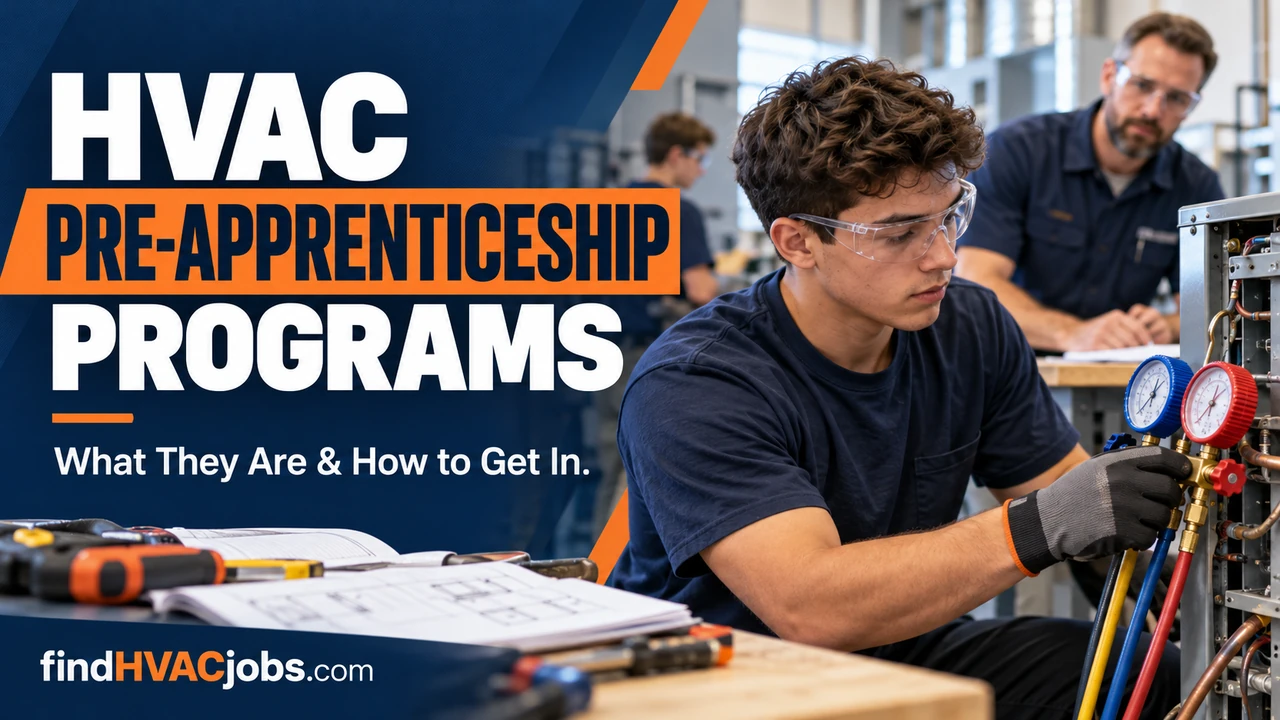
An HVAC pre-apprenticeship is a short training program that gets you ready to enter a registered HVAC apprenticeship. It is not an apprenticeship and it is not trade school. You learn safety, basic electrical, piping, and refrigeration fundamentals, usually leave with an OSHA 10 card and sometimes an EPA 608 card, and the program connects you to employers or an apprenticeship sponsor when you finish. Most run a few weeks to a few months. Some are free, one costs $29, and the pricier college versions run about $3,500.
Here is how pre-apprenticeship works, who runs the HVAC ones, what they cost, and whether you need one at all.
The U.S. Department of Labor defines pre-apprenticeship as a program designed to prepare you to enter and succeed in a Registered Apprenticeship Program. A quality program has five parts: training aligned with what employers need, hands-on practice in a lab or workplace, at least one industry credential, access to counseling and support services, and a formal link to one or more registered apprenticeship sponsors who take graduates.
That last part is the one that matters. A course that teaches HVAC basics but has no sponsor on the other end is a class, not a pre-apprenticeship. Ask any program who takes their graduates before you sign up.
Job Corps. The federal program runs an HVAC Pre-Apprentice track at campuses across the country. It is free for low-income 16- to 24-year-olds, and it includes housing, meals, and a living allowance. Students earn NAHB and OSHA credentials, and Job Corps also helps you finish a high school diploma or GED and get a driver's license if you don't have one. Call 800-733-5627 or apply at jobcorps.gov.
Community colleges and workforce boards. Anne Arundel Community College in Maryland runs a 204-hour HVAC pre-apprenticeship for $3,528, built to feed the ABC apprenticeship. The Fairfield County Workforce Center in Ohio runs a youth HVAC pre-apprenticeship with Hocking College that ends with NCCER Core, NCCER Level 1 HVAC, OSHA 10, and up to 6 college credits. Your local community college's workforce office is the first place to ask.
Contractor associations. PHCC chapters run the cheapest and fastest ones. PHCC of North Carolina offers an online HVACR pre-apprentice course for $29. PHCC of Georgia runs a six-week version covering safety, basic math, systems, and troubleshooting before you start the four-year apprenticeship.
High schools. A growing number of districts run HVAC pre-apprenticeships for seniors. Pryor High School in Oklahoma pairs a semester of coursework with 3 hours a day working in the school's own maintenance department, and students sit for OSHA 10 and EPA 608 before graduation. Ask your school's CTE office whether one exists.
| Path | Paid? | Length | What you finish with |
|---|---|---|---|
| Pre-apprenticeship | Usually no (Job Corps pays a living allowance) | Weeks to months | OSHA 10, sometimes EPA 608 or NCCER Level 1, a referral to a sponsor |
| Helper job | Yes, from day one | Open-ended | Field hours and a shot at being registered as an apprentice |
| Registered apprenticeship | Yes, from day one | 3 to 5 years | DOL certificate, licensing hours, journeyman wage |
No. Most HVAC techs never do a pre-apprenticeship. A helper or apprentice job with no experience is the normal way in, and it pays while a pre-apprenticeship usually doesn't. Getting your EPA 608 card on your own does most of what a pre-apprenticeship does for your application.
A pre-apprenticeship earns its place in three situations. You are under 25 with no diploma or no driver's license, because Job Corps fixes both and costs nothing. You want OSHA 10 and 608 in hand before you walk into a union interview. Or you are still in high school and the program is free. Outside those, take the helper job and keep the registered program application moving.
Ready to skip straight to the paid version? Browse open HVAC apprentice jobs and HVAC helper jobs.
Hiring entry-level techs? Post a job and reach candidates coming out of these programs.
Is an HVAC pre-apprenticeship paid? Usually not. Most are short unpaid courses. Job Corps is the exception: it is free and pays a biweekly living allowance, with housing and meals included.
How long is an HVAC pre-apprenticeship? Anywhere from a few weeks to a semester. PHCC of Georgia's runs six weeks, Anne Arundel's is 204 hours, and Job Corps training runs 8 months or more because it bundles in academics.
Does a pre-apprenticeship count toward my HVAC license? No. License hours come from on-the-job work under a licensed contractor. A pre-apprenticeship gets you into the apprenticeship where those hours start.
What is the difference between a pre-apprenticeship and trade school? Length and purpose. Trade school is 6 to 24 months and ends with a certificate or diploma. A pre-apprenticeship is shorter, cheaper, and built to hand you off to a registered apprenticeship sponsor.
Sources: U.S. Department of Labor Office of Apprenticeship (apprenticeship.gov); Job Corps; Anne Arundel Community College; Fairfield County Ohio Workforce Center; PHCC of North Carolina; PHCC of Georgia Academy; Pryor Public Schools via Facilities Dive (March 2024). Program details, costs, and eligibility change, so confirm with each program before applying.
