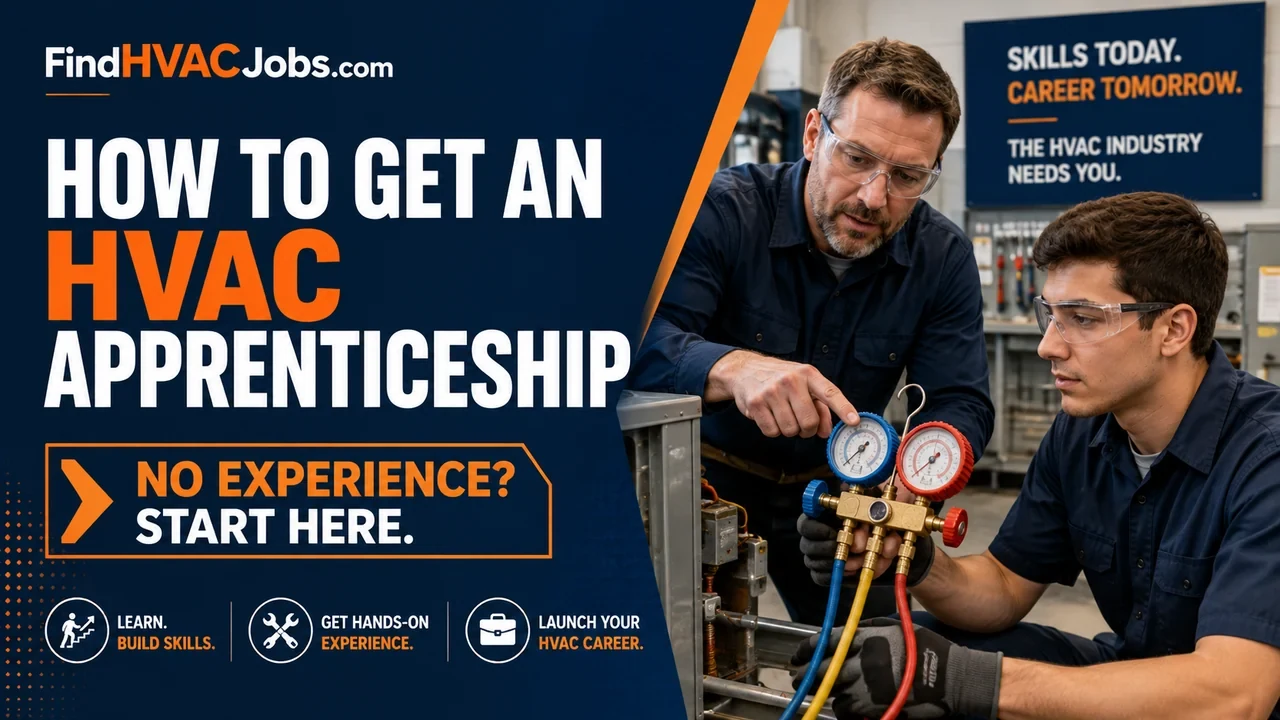
You can get an HVAC apprenticeship with no experience. That is the whole point of an apprenticeship. Nobody expects you to know a TXV from a contactor on day one, and any company that demands two years of experience for an "apprentice" role is posting the wrong job title. What employers actually screen for is a much shorter list: are you 18, do you have a diploma or GED, can you legally drive, can you pass a drug test, and will you show up at 6:45 a.m. when the schedule says 7.
That list is beatable this week. Here is how to work it.
Forget the resume anxiety. A shop hiring an apprentice or helper is not reading your work history for HVAC content, because there isn't any and they know it. They are checking for disqualifiers and green flags.
The hard requirements at most companies: 18 or older, high school diploma or GED, a valid driver's license with a record clean enough for the company's insurance, and a drug screen. Some registered programs add a basic math and reading aptitude test. That is the real gate. A DUI on your record will sink more apprentice applications than a blank resume ever will, because you cannot drive the van.
The green flags are just as simple. Any proof you are serious about the trade beats generic enthusiasm: a trade school certificate in progress, an EPA 608 card, even a written line saying you have your own basic hand tools and boots.
There are two ways into an apprenticeship, and they run on different clocks.
Door one: get hired directly by a company. This is the fastest path and where most people with no experience actually start. Residential install companies hire green constantly, especially heading into summer, because install work segments cleanly: a new guy can carry the condenser, set the pad, insulate linesets, and pull old equipment while the lead tech handles brazing and the electrical. You are earning and learning the same week you apply. Browse current HVAC apprentice jobs to see who is hiring near you right now.
Door two: apply to a registered apprenticeship program. These are the structured programs: union JATCs run by UA and SMART locals, plus state-registered non-union programs through groups like ABC and CEFGA chapters or community college partnerships. You get paid on-the-job training, scheduled classroom hours, progressive raises on a published scale, and a nationally recognized credential at the end. The tradeoff is timing. Many locals only open applications once or twice a year, and there can be a wait between the aptitude test, the interview, and an actual dispatch to a contractor. In some states the pipeline is bigger than others: Florida alone runs dozens of registered HVAC programs, and the year-round cooling season means sponsors there take intakes more often than cold-climate locals do. Georgia is similar: two Atlanta JATCs plus a statewide PHCC program, all covered in our guide to Georgia HVAC apprenticeship programs.
Neither door is wrong. If you need a paycheck this month, take door one and keep the registered program application in motion at the same time. Companies poach from each other's helper benches constantly, and plenty of registered sponsors will credit hours you already worked. The full HVAC apprenticeships guide breaks down how registered programs work state by state.
Money first, since it is the question everyone actually has.
Most first-year and second-year HVAC apprentices earn between $17 and $24 an hour, based on May 2025 BLS wage data for the bottom tenth of HVAC earners in each state. The median state lands near $41,900 a year for a beginning apprentice. Union scales publish the ramp openly: UA Local 290 in Oregon starts apprentices around $18.38 an hour at 40 percent of journeyman rate, with the first raise about six months in.
The ramp is the point. The national median for all HVAC techs was $62,940 as of May 2025, and you are typically looking at four to five years to get there, faster if you specialize. The full breakdown of HVAC apprentice pay covers every state's entry and mid-apprenticeship markers.
1. Get EPA 608 before you apply, or say you are scheduled to test. You cannot legally handle refrigerant without it, it never expires, and it costs less than a tank of gas for the Type I exam. It is the single cheapest way to separate yourself from every other no-experience applicant in the stack. Our EPA 608 certification guide covers the exam types and how to prep.
2. Time your applications to the season. Residential shops staff up in March through May, before the first heat wave buries them in service calls. Apply in early spring and you are interviewing while owners plan crews; apply in late July and you are asking a guy 40 calls behind to stop and train you.
3. Call, don't just click apply. Small shops run on the owner's phone. A two-minute call saying you are 22, have a clean license, have your 608, and can start Monday will beat fifty Indeed applications. Ask for the owner or the service manager by name if the listing gives one.
4. Target install crews first. Service work needs diagnostic skill you do not have yet. Install work needs someone strong, careful, and on time. That is a job you can do in week one, and it is where you learn equipment from the inside out.
5. Take a helper job if the apprentice title isn't open. Same warehouse, same trucks, slightly different ladder rung. Plenty of techs started as the helper who asked good questions until someone handed him the gauges. The difference between the two titles matters less than people think at the entry point, and our helper vs apprentice breakdown covers when each one is the smarter move. You can browse open HVAC helper jobs the same way you would apprentice listings.
One more move that costs nothing: make a free job seeker profile and mark yourself open to entry-level work. Our how to get hired in HVAC page walks through it, and employers searching for helpers and apprentices can find you while you work the phones.
It is not a technical interview. Nobody is going to ask you about superheat.
The questions behind the questions: Will you show up every day, including the Friday after a holiday? Can you physically do this, meaning 50-pound condensers, attics that hit 130°F in August, and crawlspaces you enter on your stomach? Can you be around customers without embarrassing the company name on the van? And are you going to stick around long enough to be worth training, because every hour a lead tech spends teaching you is an hour of production the shop eats.
Answer those directly and you are ahead of most applicants. Bring your driver's license, your 608 card if you have one, and boots.
Yes. Apprenticeships exist to train people from zero, and the screening is reliability and legal basics: age, diploma or GED, driver's license, drug test. Registered programs add an aptitude test and an interview.
No. Trade school helps and can shorten the path, but direct-hire apprentice and helper roles do not require it. If you do enroll, you can usually work in HVAC while in school, which keeps a paycheck coming and builds field hours at the same time. Many techs learn entirely on the job. If you want OSHA 10 and a 608 card in hand before you interview, a short HVAC pre-apprenticeship covers both without the tuition. If you want the structured route without tuition, registered apprenticeship programs pay you while you train.
Direct-hire apprenticeships cost nothing; you are an employee from day one. Registered programs are typically low-cost or free because sponsors and contractors fund the training, though you should budget $800 to $1,500 for starter hand tools over your first year. Some union programs charge modest book or dues fees.
Most apprentices start between $17 and $24 an hour and reach their state's mid-apprenticeship marker by years three and four. The national median for all HVAC techs was $62,940 as of May 2025 BLS data, and that is a realistic four-to-five-year target from a standing start.
Be honest about it up front and target larger companies, warehouse-adjacent roles, or duct shop and fabrication work where you are not assigned a vehicle. A suspended license is a bigger barrier in this trade than a blank resume, so resolve it as fast as you can.
Ready to apply? Browse open HVAC apprentice jobs by state and city on findHVACJobs.com.
